Google Search revenue barely rose in Q3 2026 despite a five-year-high query growth rate
On 28 October 2026 Alphabet reported Google Search & other revenue of $63.35 billion, up 12% year over year, its slowest growth since Q2 2025. Alphabet said its year-over-year query growth rate was the highest in five years. Search revenue rose just $79 million on Q2. No paid click or cost-per-click figures were published.

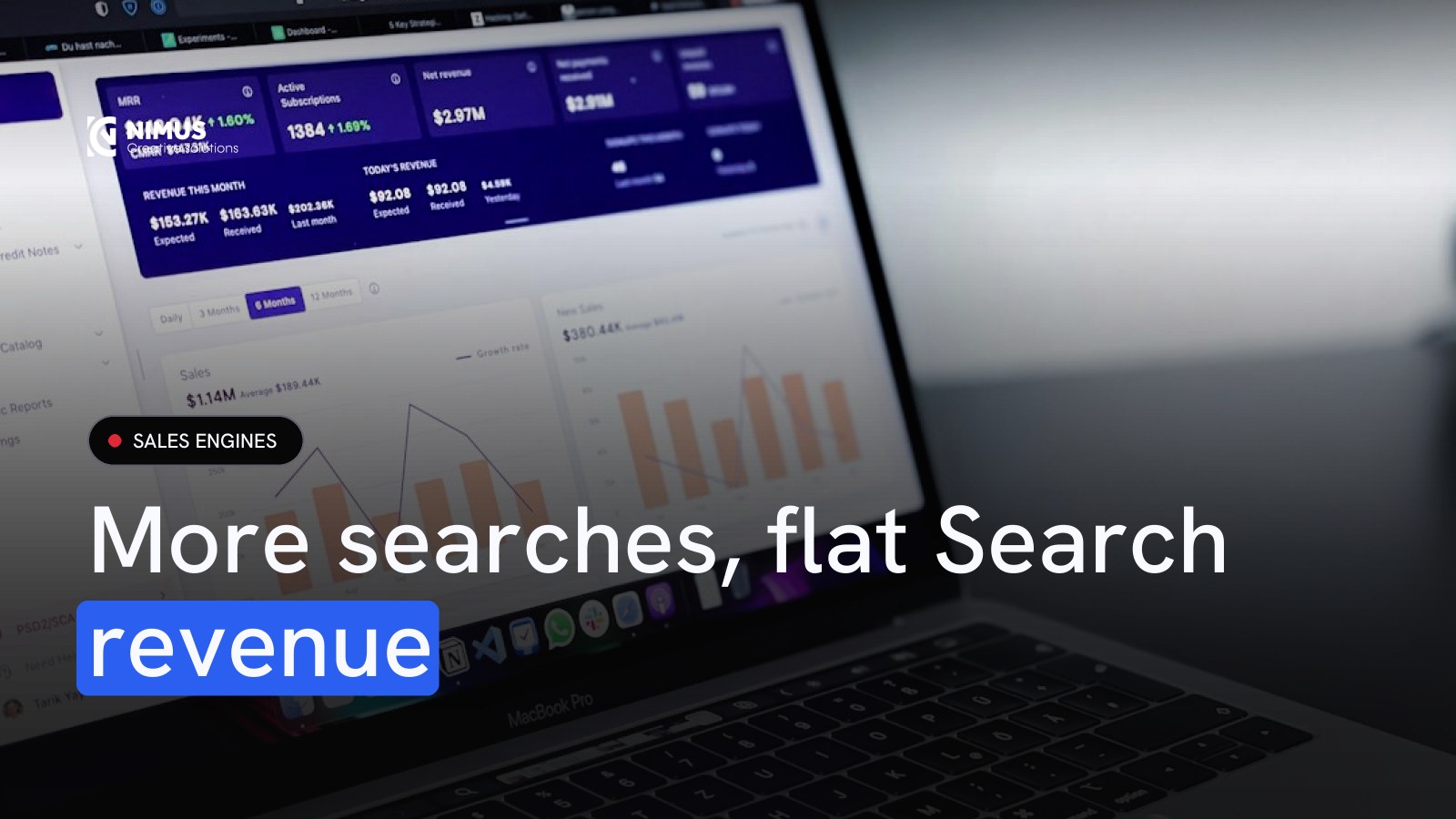
Representative image. Photo: path digital / Unsplash
On 28 October 2026, Alphabet reported third-quarter results in which Google Search & other revenue grew 12% year over year to $63.35 billion, while the company said its year-over-year Search query growth rate was the highest in five years. For businesses that pay for Google ads or depend on organic traffic, the gap between rising query growth and slowing revenue matters, because it is not yet clear how the extra searches translate into ad clicks or prices.
- Search & other revenue rose 12% year over year, the slowest rate since the second quarter of 2025, and added only $79 million on the previous quarter.
- Alphabet said the year-over-year growth rate of queries is the highest in five years. It did not publish a query count or percentage.
- Alphabet published no paid click or cost-per-click figures, so volume and price effects cannot be separated from the earnings documents.
- Kenyan advertisers should watch their own cost per lead and not assume Google's results tell them what their campaigns will cost.
What happened
Alphabet reported revenue of $127.6 billion for the quarter ended 30 September 2026, up 25% from a year earlier. Google Search & other revenue was $63.35 billion, up from $56.57 billion a year earlier. PPC Land, the industry publication whose report we rely on here, notes that the second-quarter figure was $63.27 billion, so Search rose by only $79 million between the two quarters. In 2025, the same step added $2.377 billion.
Growth in other ad lines was also modest: YouTube ads rose 9% to $11.21 billion and Google Network rose 1% to $7.46 billion. Google Cloud more than doubled to $30.71 billion. Cloud's rise is why advertising fell to 64.3% of Alphabet's revenue from 72.5% a year earlier. Put simply, most of the company's growth is now coming from outside ads.
What is confirmed, and what is not yet known
Confirmed in the reported results: the revenue figures above, and Sundar Pichai's statement that the year-over-year query growth rate is the highest in the last five years. This is a growth rate. It does not mean people are searching more than ever, and it is not described as a record volume.
Not known: how many queries there are, how many ads were clicked, and what each click cost. The release says further detail will appear in the quarterly Form 10-Q. PPC Land also asks where the revenue from the extra queries is, and notes that Alphabet's documents do not address it.
There are explanations Alphabet gave in advance. In July, chief financial officer Anat Ashkenazi warned that the third quarter would begin lapping an acceleration in Search performance that started in the third quarter of 2025, and flagged a foreign exchange headwind. Both materialised. These help explain a slower annual rate, but PPC Land argues they do not on their own explain a nearly flat quarter.
Pichai said Google is focused on "building the best Search user experience, followed by monetization." PPC Land recalls that during the earlier shift to mobile, Google reported falling average cost-per-click for many consecutive quarters. Pichai did not say how long the current phase might last. That comparison is PPC Land's, and it is not a forecast.
Why it matters for a website that sells
Pichai described one Search experience across AI Overviews, AI Mode and traditional Search. He said queries in AI Mode are on average three times longer than traditional searches, and one in five AI Mode searches globally use voice, images or documents. The full report is on PPC Land.
PPC Land also reports third-party data on organic traffic. These come from other organisations and are not in Alphabet's documents, and we have not checked the underlying studies, so treat them as indicators: Chartbeat's data showed search at 12% of North American publisher pageviews, down from 21% a year earlier, and Ahrefs' analysis of 300,000 keywords linked AI Overviews to a 58% lower click-through rate for top-ranking pages, which PPC Land describes as a correlation, not a demonstrated cause. These are mostly North American and US findings. We have no source showing the same effect in Kenya.
What this means for Kenyan businesses
The sources do not say anything about Kenya: no Kenyan query growth, no Kenyan CPC and no confirmation of how AI Mode features are rolled out locally. Do not read Google's global numbers as Kenyan results.
What can be said is how to use the news. The one cost benchmark in the report is WordStream's 2026 US median CPC of $5.42, about 3% higher than a year earlier, across 13,474 search campaigns. That is a US figure and not a guide to Kenyan prices. For local ranges, see our own guide on Google Ads cost in Kenya, and treat any figure there as an estimate to check against your own account.
| Who | What the news suggests | What to do |
|---|---|---|
| Businesses running Google Ads | Price and click data are unpublished, so results may vary | Track cost per lead monthly, not just clicks |
| Businesses relying on organic search | Some third-party data link AI answers to fewer clicks (US-based, not Kenyan) | Measure your own organic clicks and enquiries |
| E-commerce and service sites | Longer, multi-format queries are growing in AI Mode | Make pages answer specific questions clearly |
Our analysis
This section is Nimus's opinion, based on the sourced facts above and general professional practice. It is not test data.
First, a rising query growth rate with flat revenue could mean several things, and the documents do not say which. One reading is that new AI-driven searches show fewer or lower-priced ads for now. Another is that timing and currency effects explain much of it. We cannot tell from the evidence, so we would not change a budget on this headline alone.
Second, the common mistake will be reacting to global headlines instead of your own numbers. A Nairobi business that tracks leads by source can see whether its Search cost per lead changed. One that does not will be guessing.
Third, as a matter of general practice, pages that state clear answers, prices, locations and next steps are easier for both people and AI summaries to use. We offer this as a professional view, not as proof of ranking effects.
Practical next steps this month
- Pull the last six months of Google Ads data and calculate cost per lead and cost per sale, not only clicks.
- Check Search Console for organic clicks and impressions by page, and note any pages where impressions hold but clicks fall.
- Record where enquiries come from (calls, WhatsApp, forms, M-Pesa checkouts) so you can tie them to Google traffic.
- Rewrite your top service pages to answer the specific questions buyers ask, with clear prices or ranges, locations and contact options.
- Review the auto-expanding settings in your campaigns. PPC Land cites smec's finding that AI Max had broadened about 29% of exact match impressions by July 2026, so review search terms regularly.
- Set a review point after Alphabet's Form 10-Q is filed, in case it contains more detail.
If you want help with this, the Website As A Sales Engine service covers technical SEO, speed and Core Web Vitals, AI search optimisation (GEO) and schema, Google Ads search campaigns, and lead capture with WhatsApp hooks and a lead backend. In practice that means making sure your pages, tracking and campaigns show what each Google click costs you and what it returns. See Website As A Sales Engine or the Google Ads vs SEO comparison.
Frequently Asked Questions
Did Google Search revenue fall?
No. It rose 12% year over year to $63.35 billion, but that is the slowest annual rate since Q2 2025, and it was almost flat against Q2.
Does this mean Google Ads will get cheaper or dearer in Kenya?
The sources do not say. Alphabet published no cost-per-click figures, and nothing in the reporting is specific to Kenya.
Sources
- Google Search sales gain just $79m on Q2 as query growth hits 5-year high, PPC Land, 29 Oct 2026
Written by the Nimus Newsroom with AI assistance from the sources above, and checked against them before publishing. Spotted an error? Tell us through the contact page and we will correct it.
Want This Built For Your Business?
This is exactly the kind of thing we build. Book a free call and I'll tell you where to start.
Free download for this topic: Website Launch Checklist